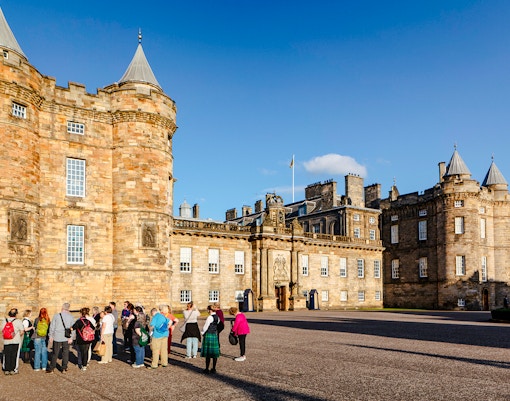
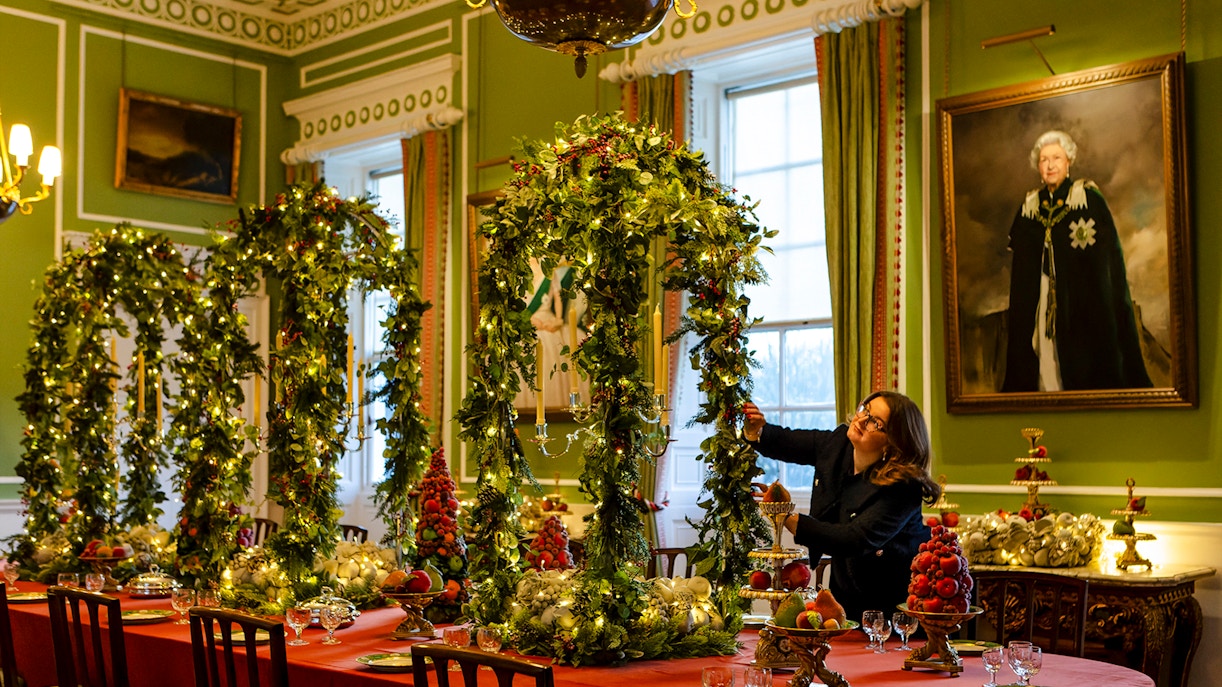
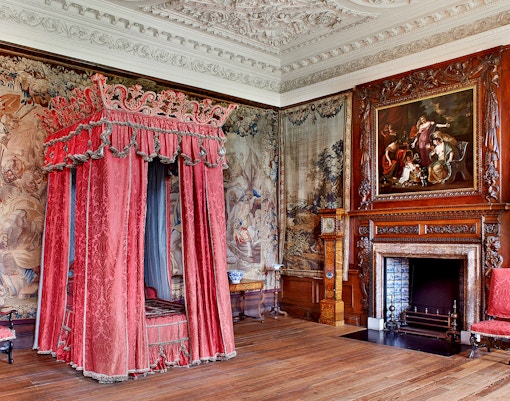
The State Apartments reveal how Scotland’s monarchy presented power, status, and diplomacy through architecture, artwork, and lavish interiors. Ornate ceilings, tapestries, and historic furniture create the feeling of stepping into an active royal residence rather than a preserved museum.
Inside Holyrood Palace | Royal rooms, Abbey & hidden stories
Quick overview
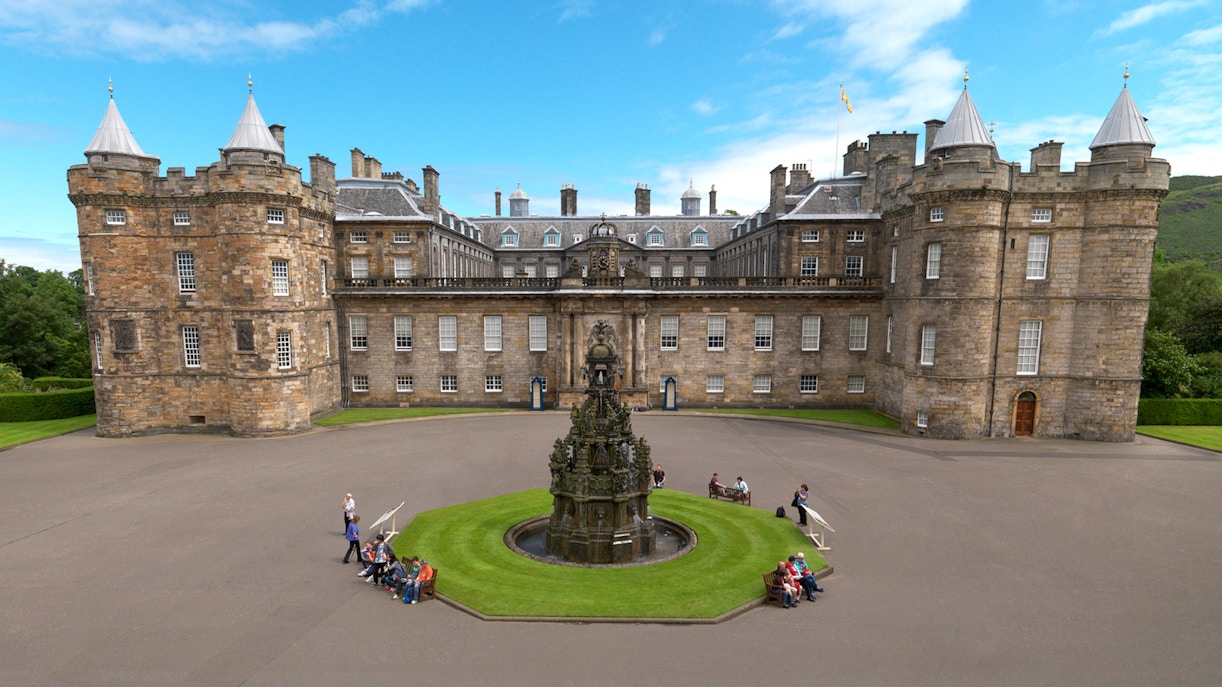
Inside Holyrood Palace, royal ceremony, political drama, and centuries of Scottish history unfold room by room. Beyond the grand exterior, you’ll walk through lavish apartments, ruined abbey arches, and chambers tied to Mary, Queen of Scots.
- Must-sees: The State Apartments, Mary, Queen of Scots’ Chambers, and Holyrood Abbey ruins.
- Hidden gem: The Great Gallery, lined with dramatic portraits of legendary Scottish monarchs.
- Pro-tip: Visit early morning for quieter rooms and clearer views inside the apartments. Guided tours help connect the palace’s royal stories far beyond the display signs.
What to expect inside Holyrood Palace?
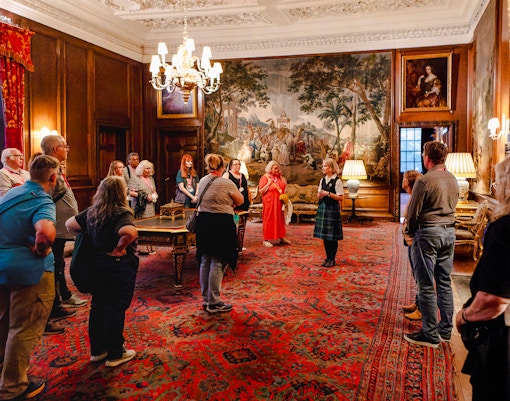
Holyrood Palace has this way of pulling you straight into Scotland’s royal past without feeling stiff or overly formal. You wander from grand rooms glowing with chandeliers and enormous portraits into quieter, more personal spaces where huge moments in Scottish history actually played out.
The contrast is what makes it memorable. One minute everything feels lavish and ceremonial, and the next you’re standing in Mary, Queen of Scots’ chambers, imagining the tension, secrets, and drama that once filled those walls!

Royal state rooms & ceremonial grandeur
Mary, Queen of Scots’ dramatic legacy
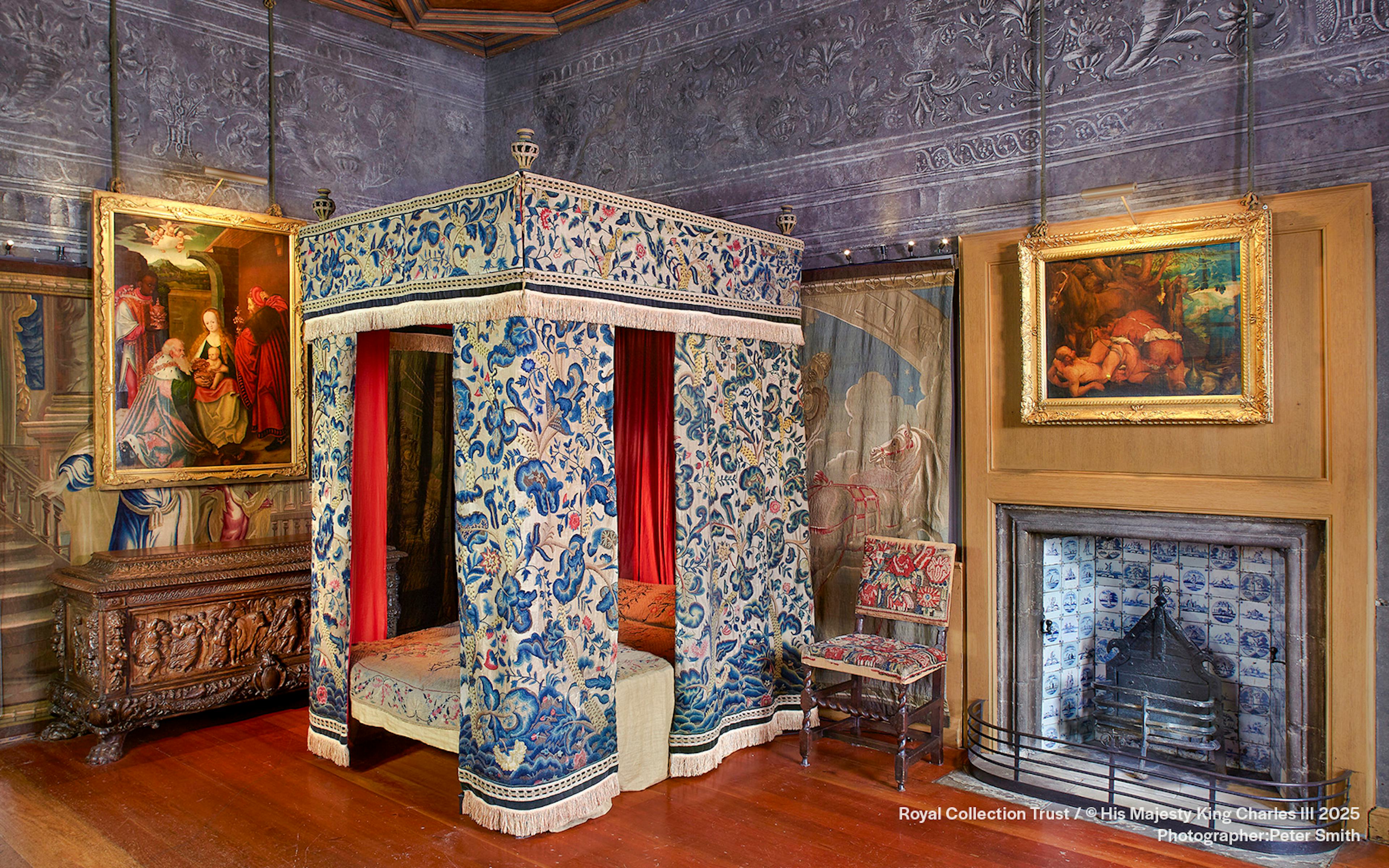
Some of the palace’s most compelling spaces are linked to Mary, Queen of Scots, whose private chambers witnessed political tension, betrayal, and murder. These rooms feel more personal and emotionally charged than the formal reception halls above them.

Art, portraits & royal symbolism
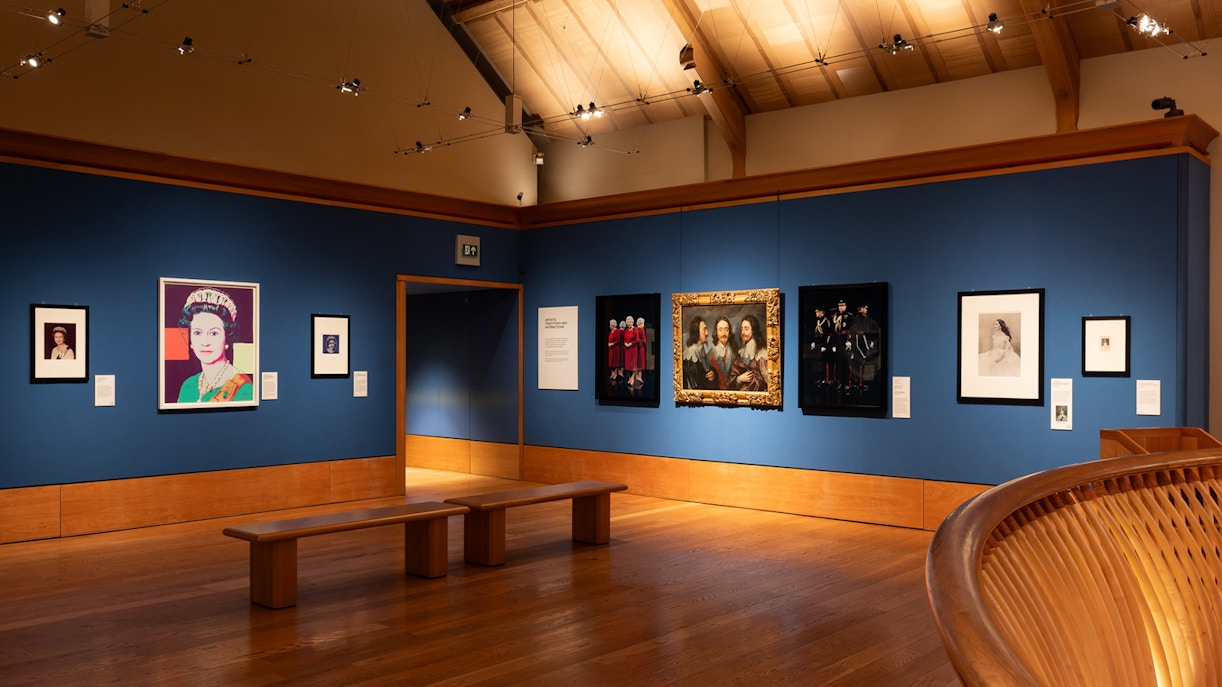
Inside the palace, portraits and decorative details constantly reinforce Scotland’s royal identity. The Great Gallery especially stands out, turning a long ceremonial hall into a visual timeline of Scotland’s monarchs and legends.

Quiet corners & ruined abbey beauty
Beyond the richly decorated interiors, the ruined Holyrood Abbey offers a striking contrast. Open to the sky and lined with weathered Gothic arches, it adds a quieter, reflective side to the experience that many visitors don’t expect.
Pro tip: Visit the palace apartments before midday tour groups arrive, then save the abbey ruins for a quieter final stop. If you want deeper historical context without feeling overwhelmed, guided tours help connect the palace’s rooms into one continuous story.
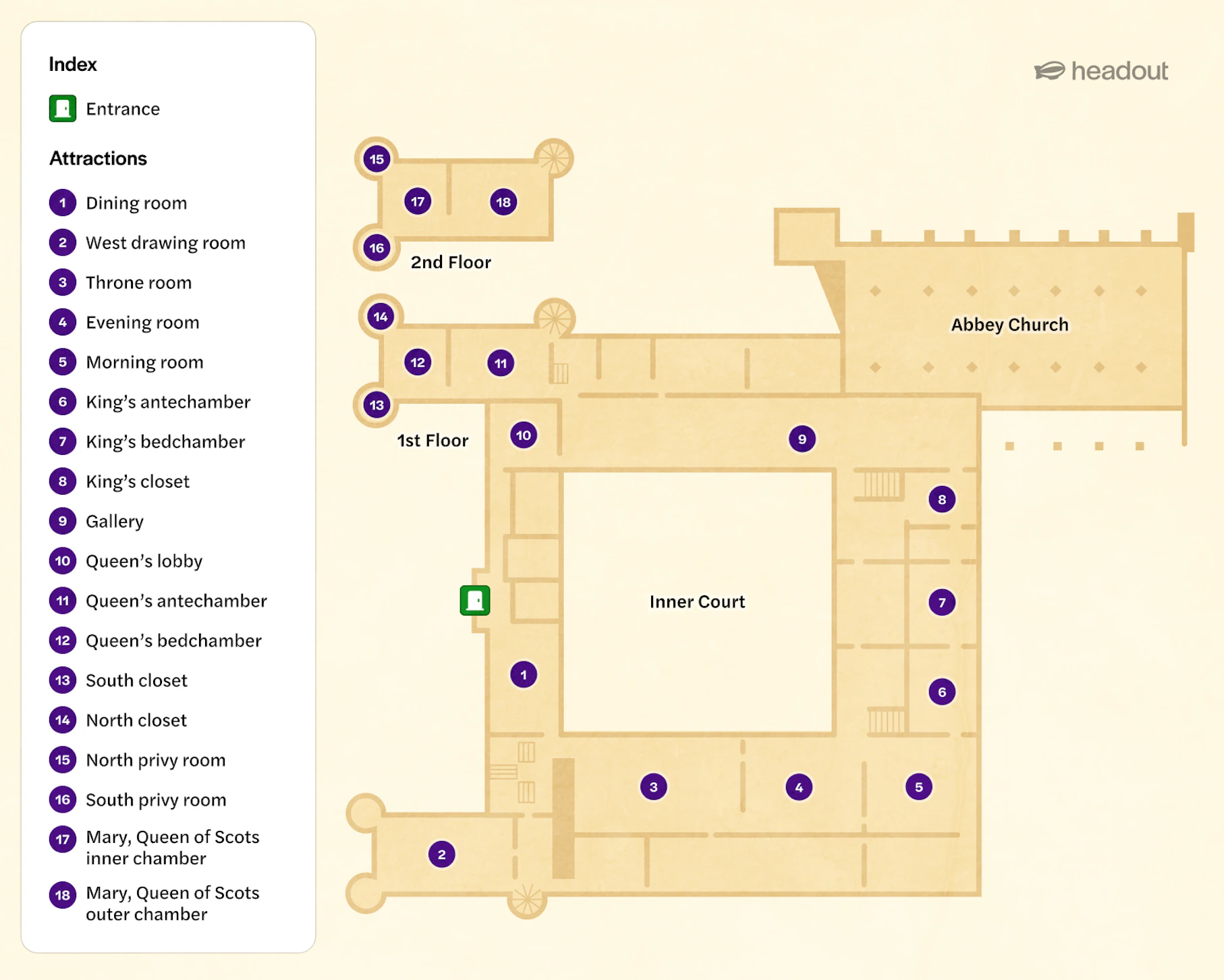
Layout of the Palace of Holyroodhouse

Self-guided walks can easily miss the subtle stories hidden inside centuries of royal history. A guided tour helps you navigate through the grand State Apartments, Mary, Queen of Scots’ dramatic chambers, and the Gothic abbey ruins with expert context.
Top highlights inside Holyrood Palace

Mary, Queen of Scots’ Chambers
These intimate rooms belonged to Scotland’s most famous queen and witnessed some of the palace’s darkest political moments. The chambers feel unusually personal compared to the Grand State Apartments.
Pro-tip: Look closely at the small details and furnishings here; they reveal how compact royal private life actually was inside the palace.
The State Apartments
Used for ceremonies, receptions, and royal events, these lavish rooms showcase chandeliers, tapestries, portraits, and intricate plasterwork. They remain one of the clearest expressions of royal power inside Holyrood Palace.
Pro-tip: Morning visits offer the best chance to enjoy the apartments before larger guided groups arrive.
The Great Gallery
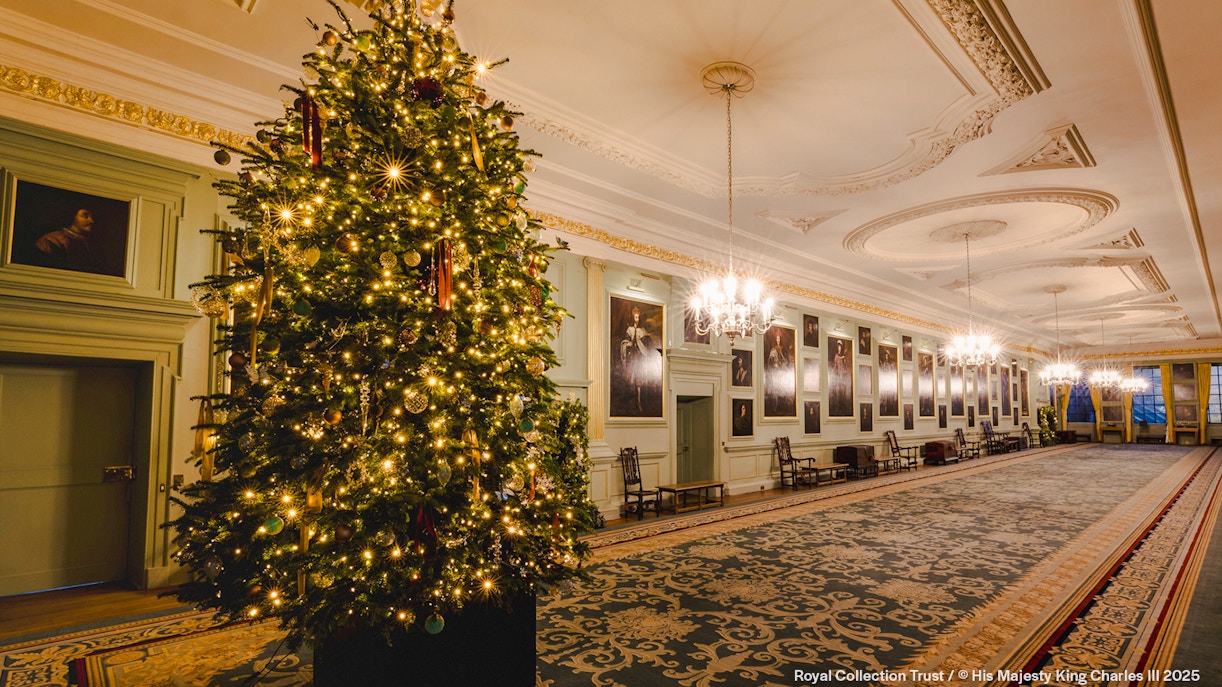
The palace’s largest room is lined with dramatic portraits of Scottish monarchs, both historical and legendary. It was designed for royal banquets and ceremonies but now feels like a theatrical walk through Scotland’s royal mythology.
Pro-tip: Stand at one end of the gallery for the best perspective of the symmetrical portraits and ceiling details.
Holyrood Abbey ruins
The roofless abbey ruins add a completely different atmosphere to the palace visit. Gothic arches, weathered stonework, and open skies make it one of the most photogenic parts of the complex.
Pro-tip: Visit later in the afternoon when softer light makes the stone details and archways stand out beautifully.
The Throne Room
Still used for official ceremonies during royal visits to Scotland, the Throne Room feels formal, elegant, and unmistakably regal. It highlights the palace’s continuing role as the monarch’s official Scottish residence.
Pro-tip: Spend a moment noticing the symbols woven into the décor; many reference Scotland’s royal traditions and national identity.
The Palace Gardens
The landscaped gardens offer a quieter break from the richly decorated interiors. Surrounded by Arthur’s Seat and the abbey ruins, they provide some of the palace’s best open views.
Pro-tip: The gardens are especially peaceful near closing time when most visitors remain inside the palace rooms.
Book your Palace of Holyroodhouse ticket
| Ticket type | Access | Entry method | Guide | Duration | Best for |
|---|---|---|---|---|---|
General entry | Palace interiors, abbey, gardens | Timed entry | Audio-guide | Self-paced | Independent visitors |
The King's Gallery tickets | Entry to The King's Gallery, access to The Edwardians: Age of Elegance exhibition, multimedia guide in English | Timed entry | Multimedia guide | Self-paced | Art-loving enthusiasts |
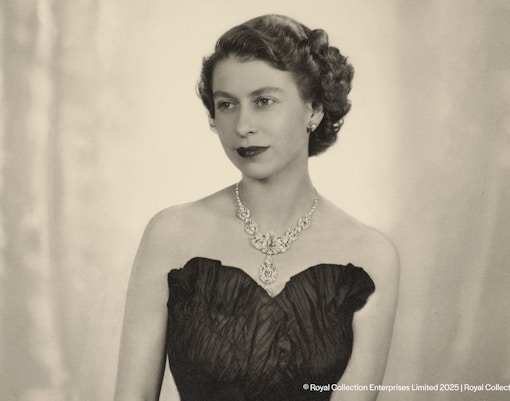
Guided tours of Queen Elizabeth II Private Apartments | Entry to Palace of Holyroodhouse, 1-hour guided tour of Queen Elizabeth II's private apartments, English-speaking guide & multilingual multimedia guide | Timed entry | Live guide + multilingual audio guide | 2 hours | Exclusivity seekers |
Royal Edinburgh combo | Holyrood Palace + nearby attractions like the Royal Yacht Britannia & Edinburgh Zoo | Timed entry | Varies | Flexible | Visitors exploring Edinburgh landmarks |
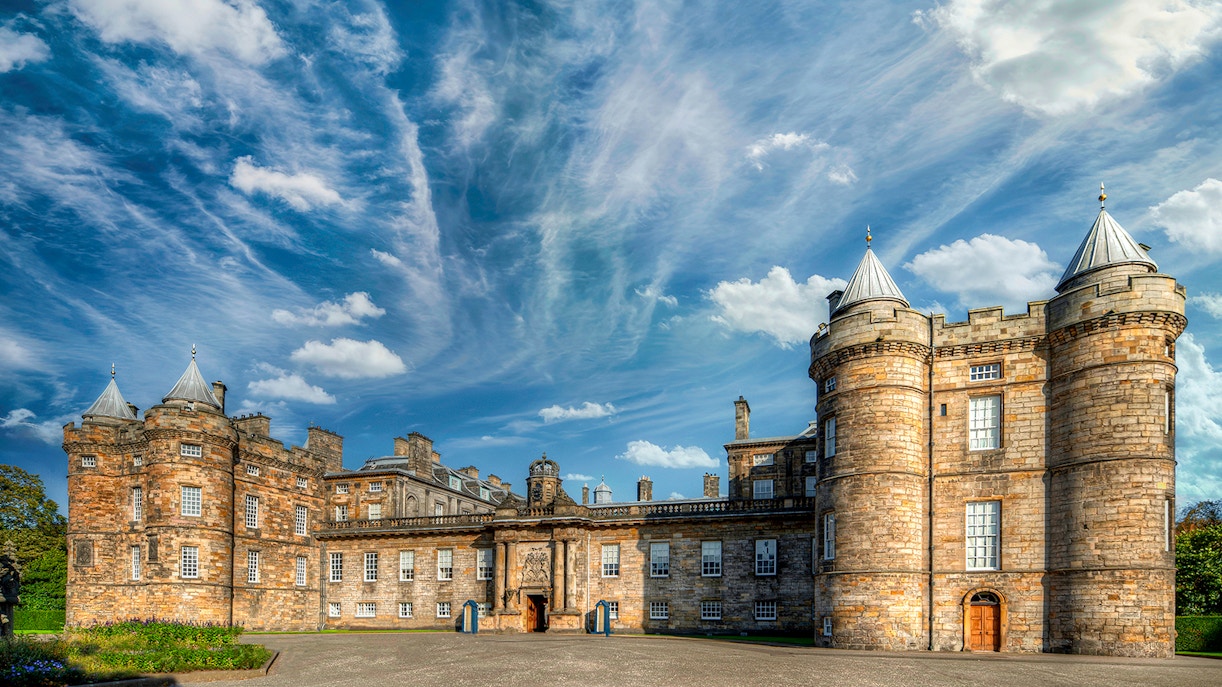
How to explore the Holyrood Palace

- Book ahead for better slots: Booking tickets online gives you better entry slot choices, especially during weekends, holidays, and Edinburgh’s busiest summer travel months.
- Arrive a little early: Arrive at least 15–20 minutes early to comfortably clear security checks and collect your multimedia or audio guide before entering.
- Choose guided or skip-the-line entry: Skip-the-line and guided tickets help avoid longer afternoon queues and make navigating the palace interiors feel much smoother for first-time visitors.

- Mornings feel calmer: Early mornings are usually the quietest, especially inside the State Apartments, where larger guided groups tend to arrive later in the day.
- Late afternoons look beautiful: Late afternoon visits bring softer light across the abbey ruins and gardens, making the palace grounds feel calmer and more atmospheric.
- Weekdays are usually quieter: Weekdays generally feel less crowded than weekends, particularly outside school holidays and major Edinburgh festival periods during summer.

- Quick visits cover the highlights: A quick highlights visit takes around 60–90 minutes, covering the State Apartments, royal chambers, abbey ruins, and Great Gallery comfortably.
- Two hours feels ideal: Most visitors spend closer to two hours exploring the palace interiors slowly, especially when using the included multimedia or audio guides.
- History lovers may stay longer: History lovers can easily spend longer lingering in Mary, Queen of Scots’ chambers and reading detailed stories behind the palace collections.

- Start with the grand apartments: Begin with the State Apartments first, before tour groups arrive, so you can enjoy the grand ceremonial rooms at a slower pace.
- Continue into royal history: Continue toward Mary, Queen of Scots’ Chambers and the Great Gallery, where some of the palace’s most dramatic stories unfolded historically.
- Finish somewhere quieter: End your visit at Holyrood Abbey and the gardens, where the quieter surroundings feel especially peaceful after the richly decorated interiors.

- Most areas are accessible: Most areas inside Holyrood Palace are wheelchair accessible, including visitor facilities, exhibition spaces, cafés, and the main palace route.
- Helpful visitor facilities available: Accessible toilets, lifts, and seating areas are available throughout much of the complex to help visitors explore more comfortably.
- Some historic sections are limited: Some historic rooms and older sections have limited accessibility because of preservation requirements and the palace’s centuries-old architectural layout.

- Travel light if possible: Large bags and suitcases are not allowed inside the palace, so travel light if you plan to visit during a sightseeing day.
- Check photography restrictions: Photography restrictions may apply inside selected rooms and exhibitions to help preserve fragile artworks, furnishings, and historic decorative interiors.
- Respect barriers and displays: Visitors are expected to remain behind protective barriers and avoid touching furniture, tapestries, paintings, and other historic objects throughout the palace.

- Save the abbey for later: Visit the abbey ruins after touring the interiors; the sudden quietness and open Gothic arches feel even more striking afterwards.
- Use the audio guide properly: Audio guides add far more depth here because many elegant-looking rooms are tied to surprisingly dramatic moments in Scottish royal history.
- Slow down in the Great Gallery: Pause in the Great Gallery for a moment instead of rushing through; the portraits and ceiling details are easy to overlook initially.
Frequently asked questions about what’s inside Holyrood Palace
Yes, visitors can explore many sections of Holyrood Palace, including the State Apartments, Mary, Queen of Scots’ Chambers, the Great Gallery, and the abbey ruins.
The most popular highlights include the State Apartments, Holyrood Abbey ruins, Mary, Queen of Scots’ Chambers, the Throne Room, and the Great Gallery.
Yes. Holyrood Palace remains the monarch’s official residence in Scotland and is still used for state ceremonies and royal events.
Visitors can access several ceremonial and historic rooms throughout the palace, though some private royal areas remain closed to the public.
Photography policies may vary depending on the room or exhibition. Some interior spaces restrict photography to help preserve historic objects and artworks.
Most visitors spend between 1.5 and 2 hours exploring the palace interiors, abbey ruins, and gardens.
No, but guided tours or audio guides add valuable context, especially for understanding the stories connected to Mary, Queen of Scots, and Scotland’s monarchy.
Yes, entry to the abbey ruins is typically included with standard Holyrood Palace admission tickets.