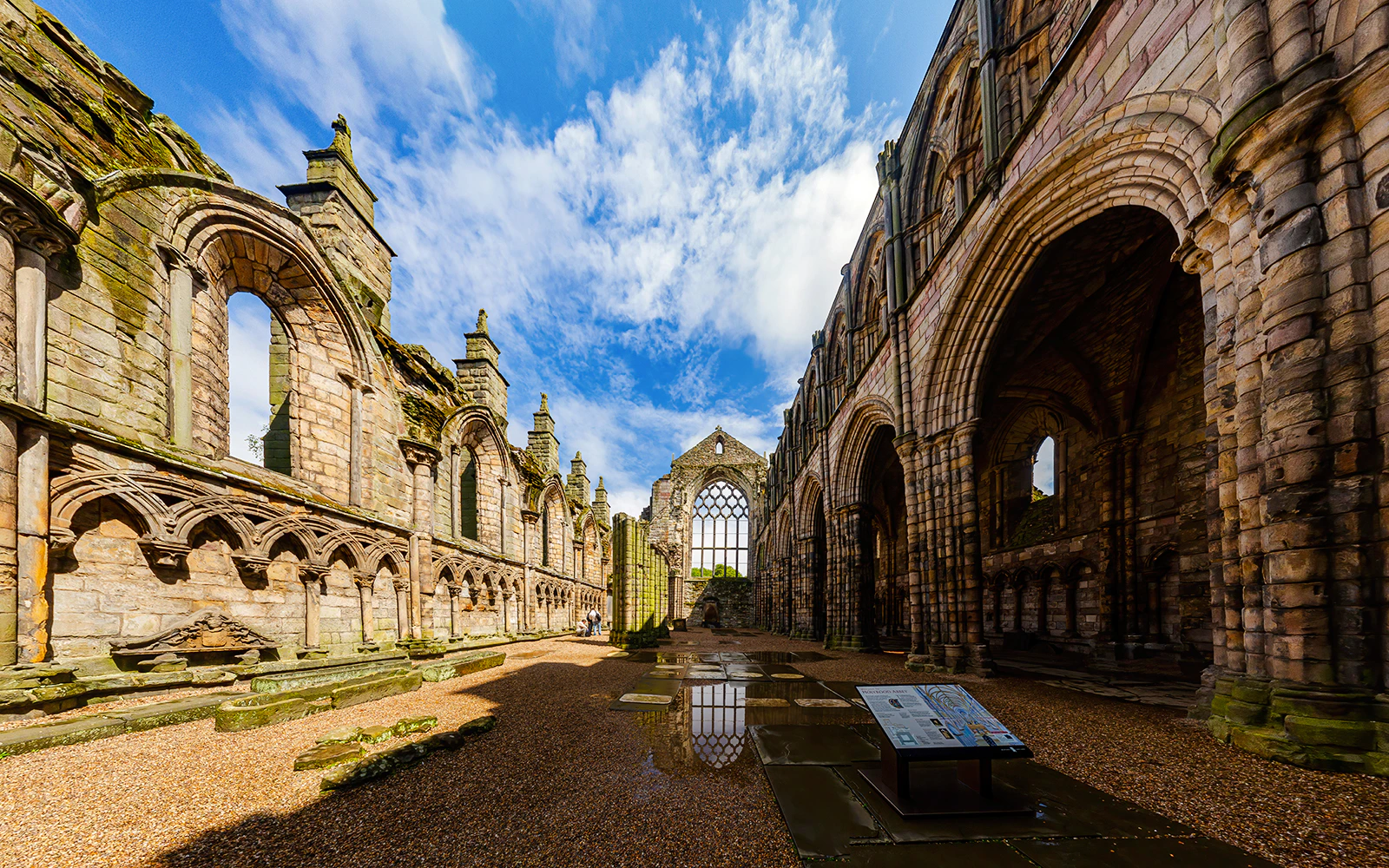
Aim for the final hour before the last entry in the late afternoon. As palace-bound tour groups clear out, the setting sun aligns directly with the ruined east window, flooding the roofless nave with low, direct golden light. Early slots force you to contend with interior palace bottlenecks before reaching the abbey; late visits offer space, low ambient noise, and optimal natural illumination for photography. Finish your day here, letting the quiet solitude replace midday tour chatter.
Quick overview
- Access: Included in all Palace of Holyroodhouse tickets
- When you'll see it: Final stop on the Palace visitor route, accessed via the grounds
- Visit duration: 15–20 mins self-guided/20–30 mins with guide
- Best time: First entry slot at 9:30am or late afternoon after 3pm
- Restrictions: Outdoor photography allowed; non-flash photography only. Uneven stone terrain.
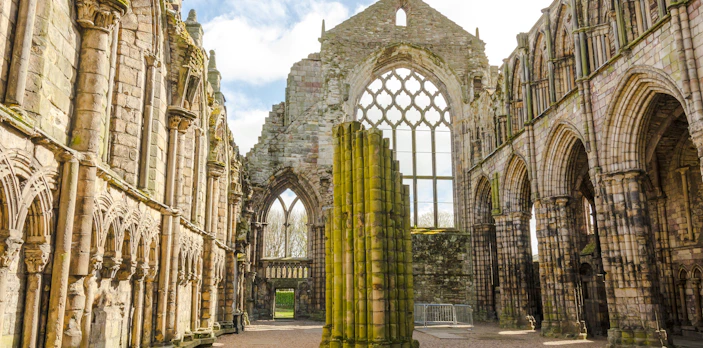
How to access Holyrood Abbey?
Holyrood Abbey is included with all Palace of Holyroodhouse tickets, so no separate ticket exists. You will reach the ruined medieval abbey near the end of the self-guided palace route, stepping directly into its roofless nave from the palace grounds. Book standard advance timed-entry tickets online to secure entry and bypass peak queues during busy mornings.
How to best experience the Holyrood Abbey
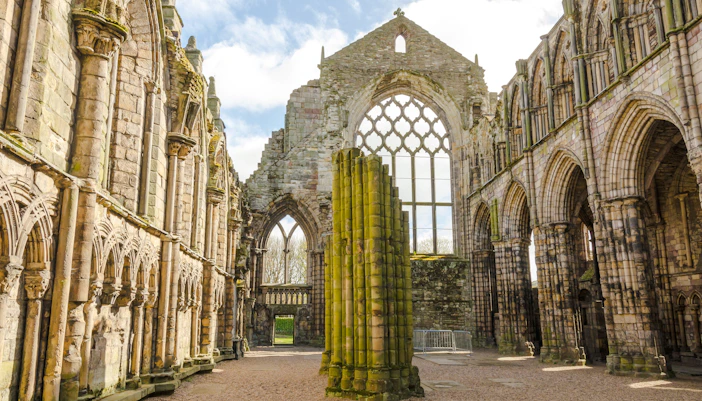
Best time to visit
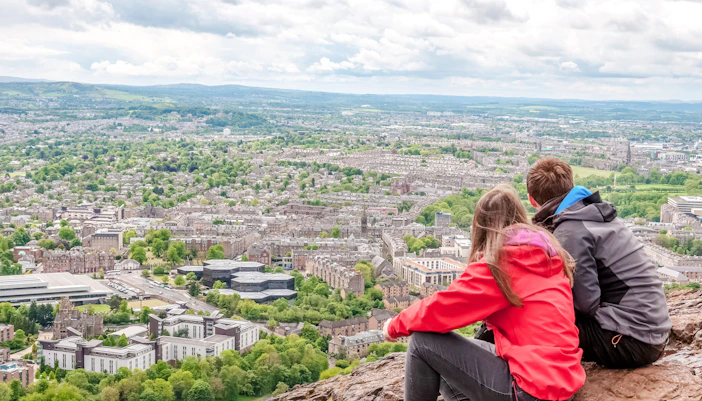
How long to spend
Self-guided: 15 to 20 minutes is ideal to absorb the architecture.
Guided (or with the multimedia guide): Give it 25 to 30 minutes to properly trace the surviving stone carvings and royal vault history.
Moving faster reduces a 900-year-old roofless ruin to just a photo backdrop; taking the extra time reveals intricate 12th-century masonry and hidden royal burial sites. Treat the ruin as a dedicated destination, not a brief doorway on your way out.
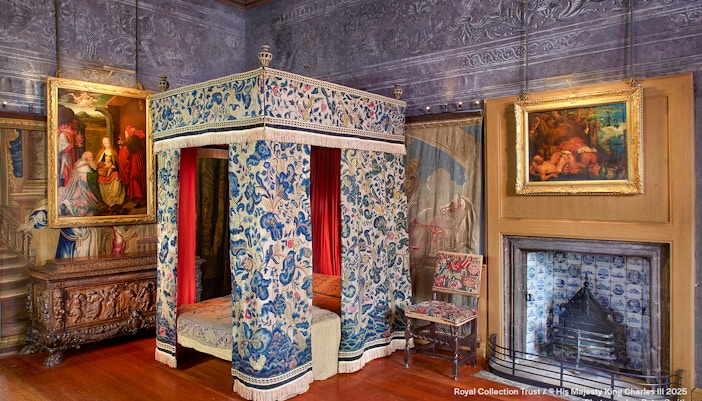
Where it fits in your itinerary
The abbey sits at the very end of the Palace of Holyroodhouse one-way route, immediately after the Royal Gardens. Do not rush through the State Apartments or Mary, Queen of Scots’ chambers to reach it, or you will arrive mentally fatigued. Allocate 90 minutes for the palace interior first, using the open-air transition into the nave as your contemplative unwind. Save your final outdoor energy reserves for this final highlight.
Crowd patterns
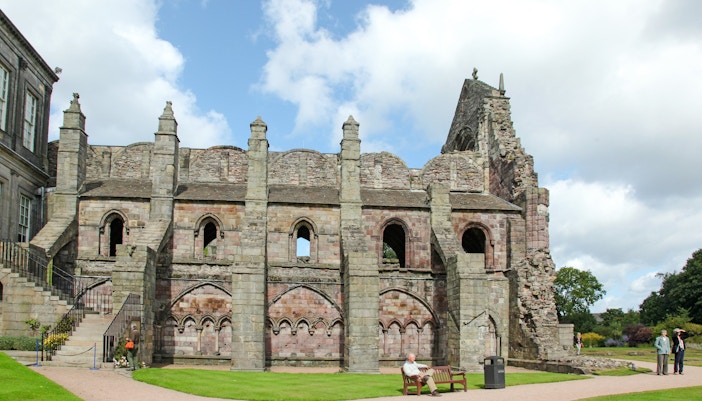
Crowds peak sharply between 11:30am and 2:30pm, creating human bottlenecks in the narrow, single-file aisleways and filling the roofless nave with loud ambient echo. Off-peak visits during the late afternoon drop crowd density by half, giving you unobstructed sightlines down the entire length of the nave. Step clear of the tour group streams near the entrance arch to secure a silent, uninterrupted view of the Gothic stonework.
What to prioritise if time is short
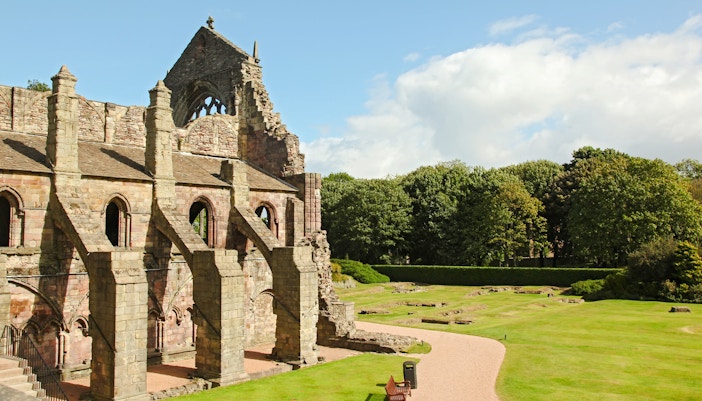
Prioritise the Great West Doorway and the Royal Vault in the south aisle. Standing directly beneath the massive west portal lets you admire the surviving 12th-century Romanesque arcade carving, while the simple brick vault holds the historic remains of Scottish monarchs like James V. Skip lingering over the ruined nave side-aisle foundations to ensure you capture these two high-impact architectural and historical anchors before exiting.
Common mistakes to avoid
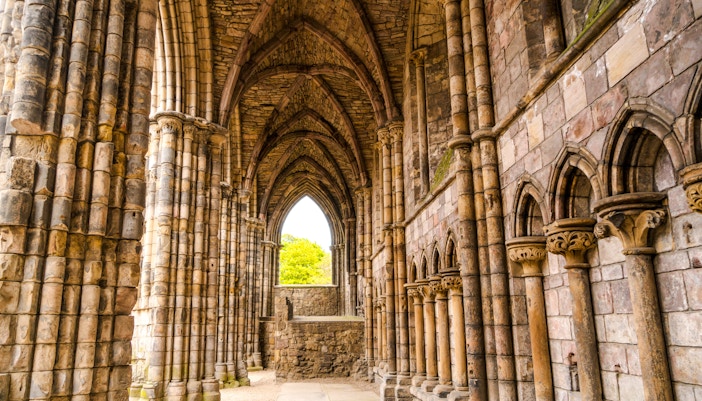
Most visitors walk into the center of the nave and only snap photos looking up at the sky, completely missing the detailed 15th-century arcade carving on the west front doorway. Turn completely around upon entering to view the interior facade details. Furthermore, trying to access the abbey without going through the main palace flow is impossible; ensure you purchase the complete palace admission ticket, as standalone abbey access does not exist.
Best tickets to experience Holyrood Abbey
| Ticket type | Why choose it |
|---|---|
Standard entry | Beat the main palace queues and reach Holyrood Abbey with energy to spare to enjoy the ruins. |
Guided tour | Get full context on the artwork, history, architecture, and sacred symbolism behind the iconic abbey walls. |
Why it's worth seeing
What makes Holyrood Abbey genuinely irreplaceable within the Palace of Holyroodhouse is that it is the direct reason the palace exists; the palace began merely as guesthouse extensions attached to this grand 12th-century Augustinian monastery. Most visitors pass through the nave assuming its roof collapsed under medieval decay, but it actually remained fully intact until 1768, when an overambitious Scottish architect installed a massive stone-slab roof that proved too heavy and dramatically caved in during a storm. Standing inside the open-air nave today feels starkly different when you realize you are walking through the catastrophic site of an 18th-century engineering failure.
Build period & foundation: 1128–1300s
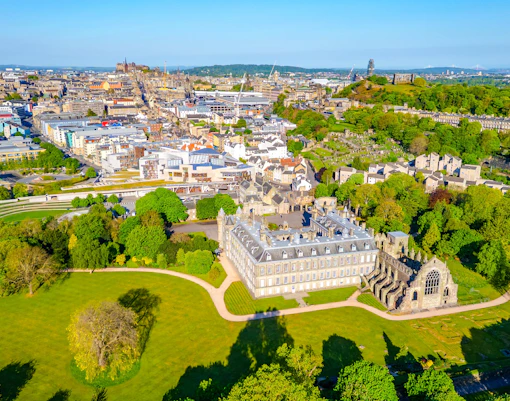
Founded in 1128 by King David I, the monastery was constructed using locally quarried sandstone over two centuries, transitioning from early Romanesque foundations to full Gothic grandeur. The original precinct spanned a vast monastery complex before repeated border warfare damaged the choir and transepts. Today’s surviving footprint consists primarily of the mid-13th-century nave, showcasing the evolution of Scottish medieval masonry.
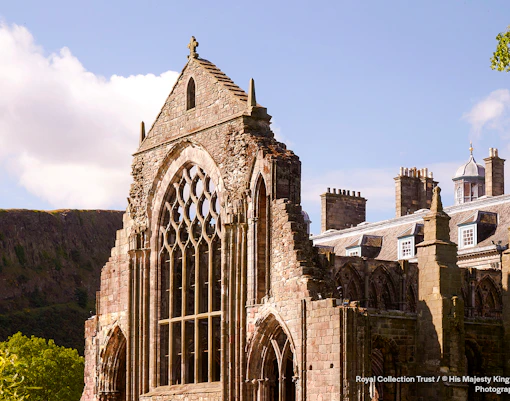
The west front doorway: 1180–1230
Crafted during the High Middle Ages, this doorway represents one of Scotland's finest surviving examples of Early English Gothic stone carving. The deeply recessed portal features delicate arcading, molded arch rings, and weathered capital carvings depicting foliage and mythical beasts. Built from durable freestone, this architectural anchor survived both the English Tudor rough wooing burnings and later structural collapses.
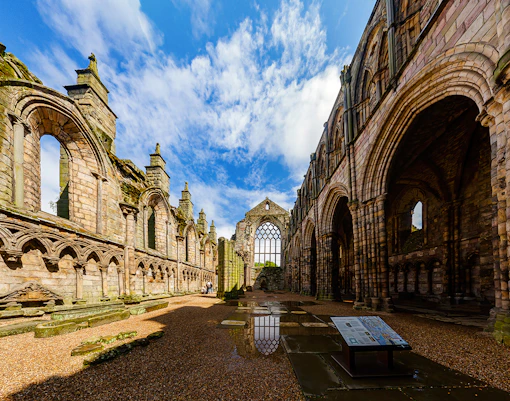
Nave arcades & triforium: 1220–1250
Constructed during the 13th-century expansion under Augustinian rule, the nave features pointed Gothic arches supported by clustered compound piers. Above the main arcade runs a well-preserved triforium level with twin-pointed openings and processional passages built into the upper stonework. The stone construction utilized mortared ashlar masonry, engineered to support vast vaulted ceilings across a monumental processional nave.
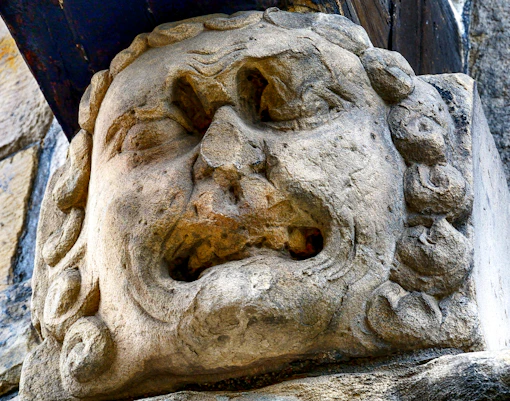
The royal vault: 15th–19th century
Located in the south aisle, this rectangular vaulted chamber was rebuilt in brick and stone to house Scotland's royal remains after earlier desecrations. Constructed with heavy stone rubble and brick groin vaulting, it serves as the final resting place for James II, James V, and Lord Darnley. It stands as a rare surviving structural enclave inside the main nave.
Historical & cultural significance
Founded in 1128 by King David I, Holyrood Abbey was built as an Augustinian monastery before its medieval guesthouse evolved into the Palace of Holyroodhouse. For over 500 years, this sacred site hosted royal coronations, weddings, and burials, including those of King James II and James V, transforming a monastic retreat into the ceremonial heart of Scottish royalty. Today, its surviving roofless nave stands as a historic monument within the royal estate, offering visitors a quiet outdoor space for reflection and historical connection.
Architectural highlights of Holyrood Abbey
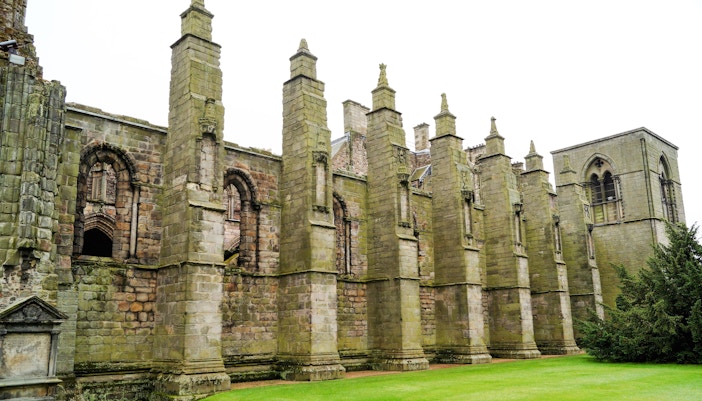
Gothic medieval design
Built in 1128 and later expanded in Gothic style, Holyrood Abbey features pointed arches, ribbed vaulting, and dramatic vertical stonework typical of medieval Scottish religious architecture.
The ruined nave
The abbey’s roof collapsed in 1768, leaving behind the striking open-air nave visitors see today, framed by towering stone columns and skeletal arches.
Royal ceremonial setting
Holyrood Abbey once served as an important royal church where coronations, state ceremonies, and aristocratic events shaped Scotland’s medieval political history.
Notable figures
King David I
Founded Holyrood Abbey in 1128 after experiencing a vision of a miraculous cross while hunting on Holy Rood Day.
King James V
Expanded the abbey's royal guesthouse into a formal palace and was buried in the abbey’s Royal Vault in 1542.
Mary, Queen of Scots
Held key royal ceremonies and wed Lord Darnley in the abbey, cementing its role in 16th-century royal history.
King James VII & II
Converted the nave into a Chapel Royal for the Knights of the Thistle, leading to anti-Catholic riots during the Glorious Revolution.
Know before you go
- Open Thursday to Monday, 9:30am to 4:30pm (November to March) and 9:30am to 6pm (April to October).
- Last admission: 3:30pm (winter) and 4:30pm (summer).
- Operating schedule directly follows the Palace of Holyroodhouse opening hours.
- Closed annually on December 25 and 26, as well as during official royal visits.
- Nearest train station: Edinburgh Waverley, approximately 0.8 miles away (15-minute walk).
- Nearest bus stop: Broadford Way or Royal Mile via Lothian Bus routes 35 and 6.
- Access point: Entered exclusively via the Palace of Holyroodhouse visitor exit route.
- Walk distance: Situated at the far eastern end of the palace complex, roughly 400 meters past the main entrance gates.
- Wheelchair access: Flat stone paving throughout the nave, accessible via ramped pathways from the palace grounds.
- Terrain: Exposed uneven flagstones and grass foundations within the roofless nave structure.
- Assistance animals: Registered guide dogs and recognized assistance dogs permitted throughout the abbey ruins.
- Seating: Outdoor bench seating located around the perimeter gardens adjacent to the west doorway.
- Photography permitted for non-commercial personal use; flash photography and tripods prohibited.
- Commercial filming, drone operation, and photography require prior permission from the Royal Collection Trust.
- Large luggage and oversized backpacks over 45cm x 30cm x 45cm not permitted on site.
- Food, alcohol, and open drink containers prohibited within the abbey boundaries.
Frequently asked questions about the Holyrood Abbey
Yes. Admission to Holyrood Abbey is automatically included with every general admission ticket to the Palace of Holyroodhouse. No additional fee or separate pass is required.
No. There is no standalone ticket for the abbey alone. Your palace entry ticket covers access to both the palace state apartments and the abbey ruins.
No. The abbey is situated at the end of the palace visitor route and has no independent public entrance. All visitors must enter through the main palace gates.
You will reach the abbey near the end of your visit. It is positioned at the far eastern end of the complex, immediately after you exit the State Apartments and Royal Gardens.
Plan for 15–20 minutes on a self-guided walk, or 25–30 minutes if using an audio guide. This gives you ample time to inspect the ruined nave, West Doorway, and Royal Vault.
No. Unlike inside the Palace State Apartments, photography for personal, non-commercial use is permitted throughout the open-air abbey ruins. Flash and tripods remain prohibited.
Yes. Pathways leading into the abbey are ramped and level, though the floor inside the nave consists of exposed flagstones and grass, which can be slightly uneven.