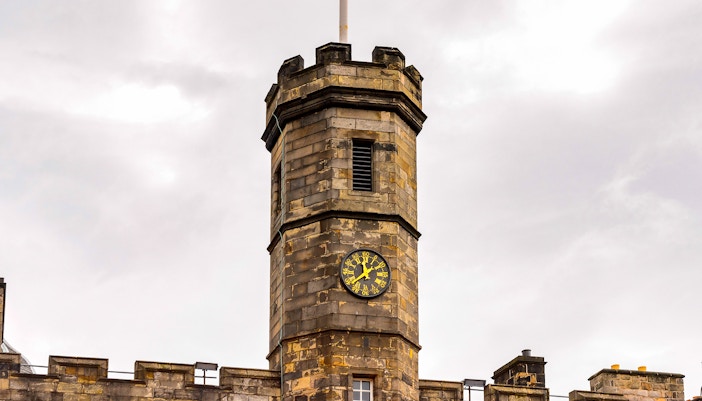
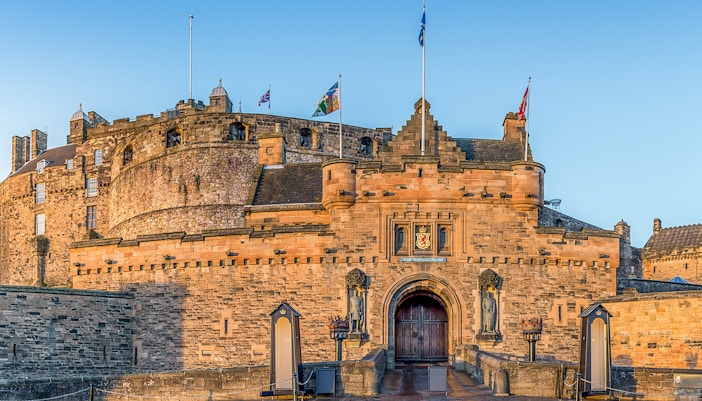
Edinburgh Castle’s earliest fortifications were established atop Castle Rock, a naturally defensive volcanic outcrop. Its commanding views allowed early inhabitants to monitor the surrounding lands, laying the foundation for centuries of strategic military importance.
Discover Scotland’s ancient fortress: Edinburgh Castle
Towering over Edinburgh from its dramatic Castle Rock perch, Edinburgh Castle has stood as Scotland’s sentinel for centuries. From epic sieges to royal ceremonies, this fortress brims with stories of power, courage, and intrigue waiting to be explored. Here’s everything you need to know about Scotland’s most famous castle and what it is today.
Edinburgh Castle timeline
- Iron Age: Castle Rock is used as a fortified site by ancient peoples, recognising its strategic defensive position long before medieval records begin.
- 1993: Edinburgh Castle is formally designated a Scheduled Ancient Monument, ensuring its preservation as a major heritage site.
- 11th century: The first stone castle grows from earlier fortifications on Castle Rock; it becomes a seat of royal power in Scotland.
- 1093: Queen Margaret (later Saint Margaret) dies at the castle. Her memory inspires later royal buildings, including St. Margaret’s Chapel.
- c. 1130 CE: King David I builds St Margaret’s Chapel in honour of his mother. It is the oldest surviving building at the castle.
- 1296: Edward I of England captures Edinburgh Castle during the First War of Scottish Independence.
- 1314: Scots, led by Thomas Randolph under Robert the Bruce, recapture the castle in a daring night assault, reclaiming it from the English.
- 1457: Mons Meg, one of the most famous medieval cannons, is given to King James II and installed at the castle as part of its defences.
- 1511: The Great Hall is completed for King James IV and becomes a centre for state events and banquets.
- 1566: Mary Queen of Scots gives birth to James VI inside the castle’s Royal Palace.
- 1571–1573: The Lang Siege sees forces loyal to Mary fiercely defending the castle; after heavy bombardment, much of David’s Tower is destroyed.
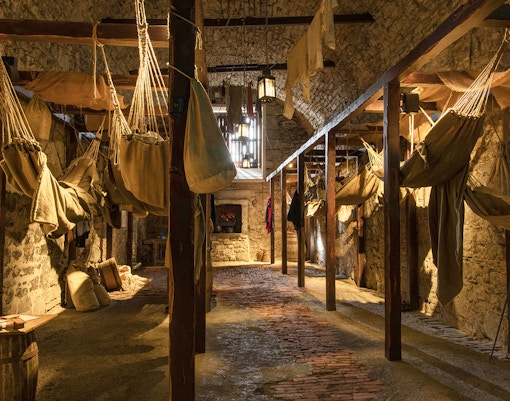
- Late 18th–early 19th centuries: The castle’s vaults serve as a prison for captives from the Seven Years’ War, American Revolution, and Napoleonic Wars.
- 1927: Part of the castle is dedicated as the Scottish National War Memorial, honouring Scottish servicemen and women.
Edinburgh Castle history explained
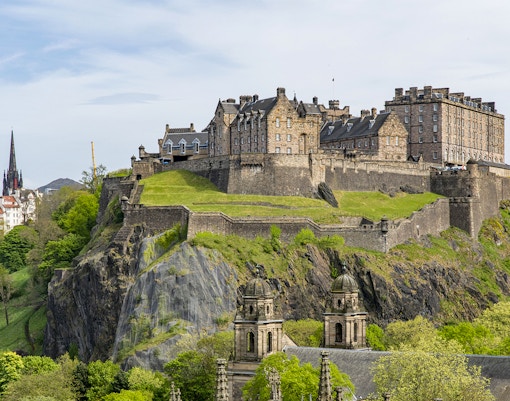
Early origins (c. 1000–1100 CE)
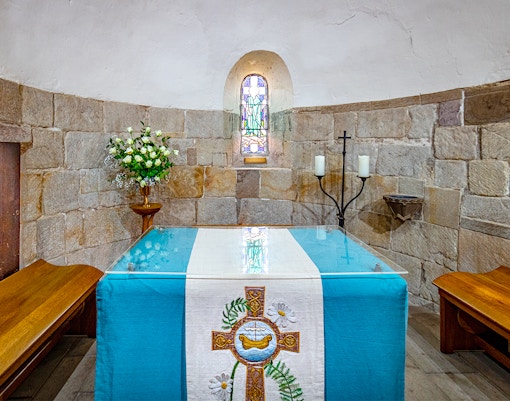
Saint Margaret’s legacy (c. 1070–1130 CE)
Queen Margaret of Scotland died at the castle around 1093 CE. To honour her, her son David I commissioned St. Margaret’s Chapel, the oldest surviving building within the castle, blending religious reverence with royal patronage.
Medieval turbulence (1296–1314 CE)
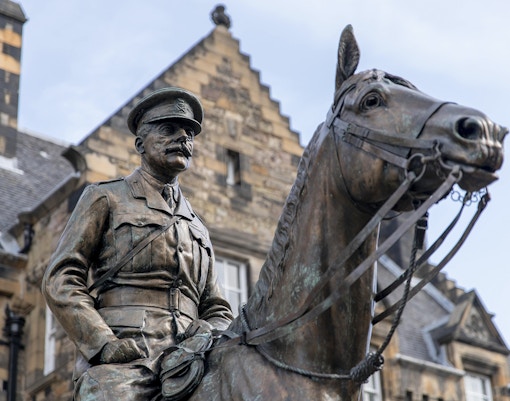
During the First War of Scottish Independence, Edward I of England captured the castle in 1296 CE. Scottish forces regained control, but Robert the Bruce ordered partial demolition in 1314 CE to prevent English reoccupation, marking a chapter in the fortress’s early history.
Reconstruction and refortification (14th century)
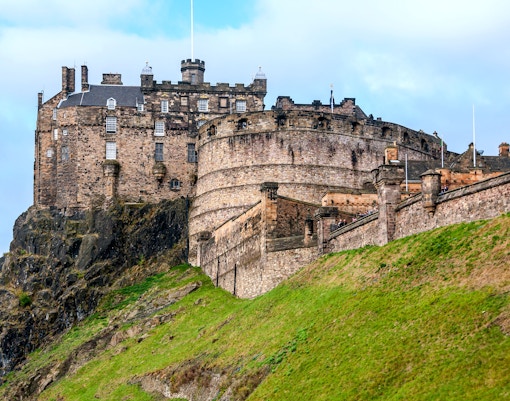
Following destruction and sieges, David II rebuilt sections of the castle, including David’s Tower. These fortifications strengthened Edinburgh Castle as a royal seat and a symbol of Scottish sovereignty.
The Black Dinner (1440 CE)
A notorious event at the castle saw the young Earl of Douglas and his brother executed during a banquet with King James II. This incident highlighted the intense political intrigue among Scotland’s nobility.
Imprisonments (1482 CE)
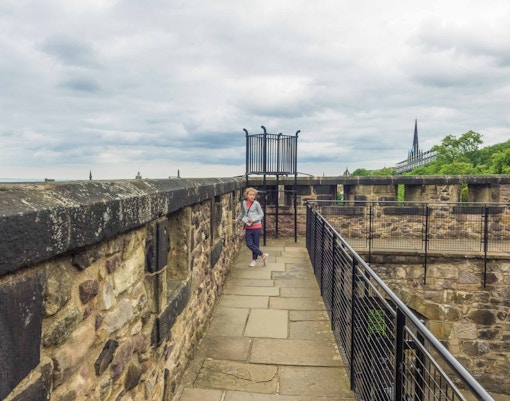
James III of Scotland was briefly imprisoned in the castle by disaffected nobles, demonstrating how the fortress functioned as a tool in domestic power struggles, not just external defense.
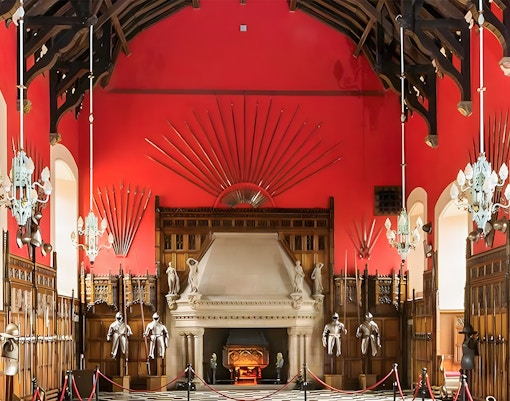
Architectural expansions (1510–16th century)
James IV commissioned the Great Hall around 1510, reflecting Renaissance influence. The castle also saw enhancements to living quarters, ceremonial spaces, and artillery placements to meet evolving military needs.
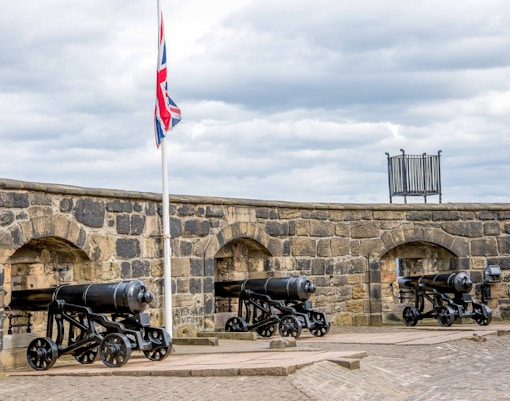
Changing military demands (late 16th century)
The Half Moon Battery was added as artillery became central to siege warfare. This bastion strengthened the castle’s defenses and showcased its adaptation to contemporary military strategies.
English sieges and civil conflict (1571–1650 CE)
Edinburgh Castle endured multiple sieges, including the Lang Siege (1571–1573) and Cromwell’s siege in 1650 CE. These events reinforced the fortress’s reputation as a highly defensible stronghold.
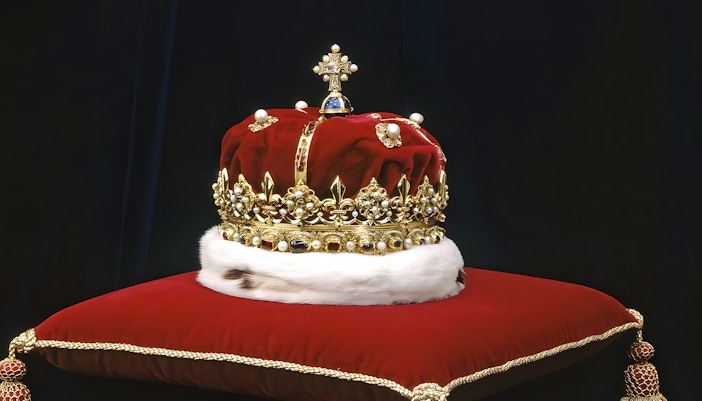
Regalia and historical rediscoveries (19th century)
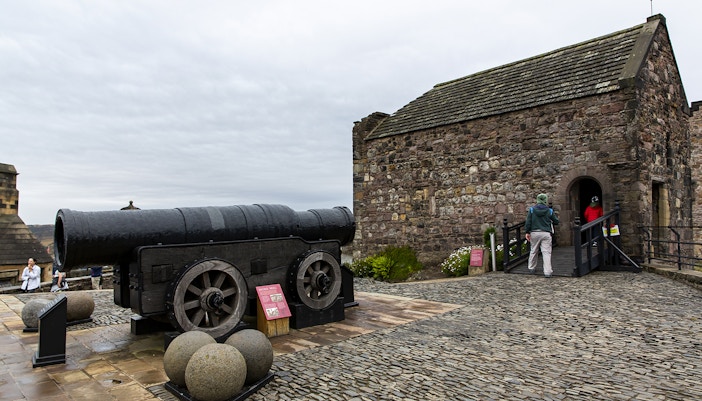
In 1818 CE, Sir Walter Scott oversaw the rediscovery of Scotland’s royal regalia within the castle. The Mons Meg cannon was reinstated in 1829 CE, underscoring the castle’s symbolic and military heritage.
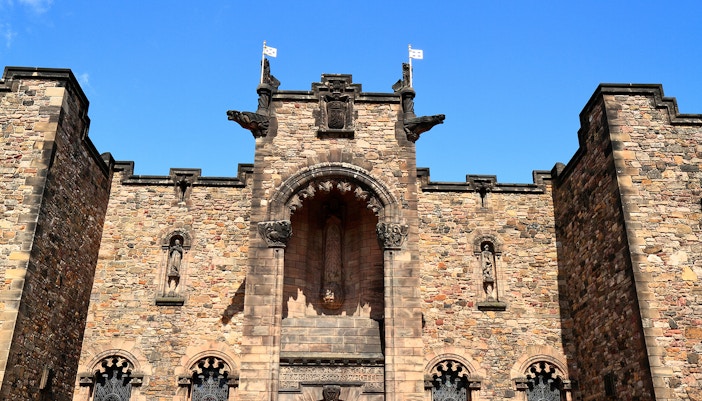
Modernization (18th–20th century)
The Governor’s House (1742) and New Barracks (1799) were built to accommodate military personnel. In 1927, the Scottish National War Memorial was completed, commemorating fallen soldiers and reflecting the castle’s ongoing national significance.
Construction and architecture of Edinburgh Castle
Edinburgh Castle was built atop Castle Rock, using the natural volcanic outcrop as its main defense. Over centuries, stone and masonry methods were employed to construct key buildings, including St Margaret’s Chapel (c. 1130), David’s Tower (14th century), and the Great Hall (c. 1510). The castle was gradually expanded with artillery bastions, like the Half Moon Battery, to meet evolving military needs. Restoration projects in the 18th–20th centuries preserved the fortress’s structural and historical integrity while maintaining its defensive and ceremonial features.
Edinburgh Castle today – why it matters
Managed by Historic Environment Scotland, Edinburgh Castle is one of Scotland’s most iconic landmarks. Perched atop Castle Rock, it offers panoramic views of Edinburgh, hosts military ceremonies and historical commemorations, and houses St Margaret’s Chapel, the Great Hall, the Scottish Crown Jewels, and the Mons Meg cannon. Celebrated globally for its cultural and historical significance, the castle remains a lasting symbol of Scotland’s resilience, monarchy, and military heritage.
Frequently asked questions about Edinburgh Castle’s history
Edinburgh Castle holds immense historical significance as a symbol of Scotland's history and has played a pivotal role in various historical events.
The castle’s earliest fortifications date back to around 1000 CE, though the site had been occupied earlier. St Margaret’s Chapel was commissioned by King David I circa 1130 CE. Construction continued over centuries under successive Scottish monarchs.
The construction of Edinburgh Castle spanned approximately 25 years.
Edinburgh Castle was built as a defensive fortress to protect the city and royal authority. Its elevated position allowed surveillance of approaching armies and acted as a stronghold in times of war.
The castle has witnessed key events, including royal coronations, sieges, and political intrigue. It houses Scotland’s Crown Jewels and has served as a military garrison, prison, and symbol of national identity.
From its early medieval fortifications, the castle evolved with the addition of artillery bastions, palaces, and ceremonial halls. Modern restoration projects preserved its historic structures while accommodating national commemorations and military use.
Key features include St. Margaret’s Chapel, David’s Tower, the Great Hall, the Half Moon Battery, the Crown Jewels, and the Mons Meg cannon. Each represents a different period in Scotland’s military and royal history.
The castle endured multiple sieges, including Edward I’s capture in 1296, Robert the Bruce’s demolition in 1314, the Lang Siege (1571–1573), and Cromwell’s siege in 1650. These events shaped its fortifications and symbolic importance.
One lesser-known historical fact about Edinburgh Castle is that it was a refuge for the British Crown Jewels, which were kept safe within its walls during World War II.
Yes, multiple guided tours and audio guides cover the castle’s architectural evolution, royal history, military significance, and legends, providing a comprehensive understanding of the fortress.
Notable figures include Saint Margaret of Scotland, King David I, Robert the Bruce, James II, and Oliver Cromwell, each leaving a mark on the castle’s history through construction, conflict, or commemoration.
The Great Hall, St Margaret’s Chapel, Crown Jewels, artillery defenses, and defensive walls remain intact. Many areas are maintained as museums, offering insight into Scotland’s past.