Edinburgh Castle vs Stirling Castle: Which Scottish castle should you visit?

Scotland is home to some of the world’s most famous castles. Among them, Edinburgh Castle and Stirling Castle stand out for their rich history, architecture, and views. Each castle has a distinct personality—Edinburgh is dramatic and urban, Stirling is grand and scenic—so understanding their differences will help you choose the best experience for your visit.

Historical significance of Edinburgh Castle and Stirling Castle

Edinburgh Castle

History: Edinburgh Castle has served as a royal residence, fortress, and military stronghold for over a thousand years. The castle was central to coronations and state ceremonies and played key roles in conflicts such as the Wars of Scottish Independence.

Location: Castle Rock, in the heart of Edinburgh, Scotland.

Relevance: Edinburgh Castle is one of Scotland’s most iconic landmarks, representing the nation’s royal and military history.

Highlights:

  • Honours of Scotland (Crown Jewels)
  • Stone of Destiny
  • St. Margaret’s Chapel

Stirling Castle

History: Stirling Castle is a strategic fortress and palace that has been central to Scottish history for centuries. It played a key role during the Wars of Scottish Independence and was later transformed into a Renaissance palace.

Location: Castle Hill, Stirling, Scotland.

Relevance: Stirling Castle symbolizes both Scotland’s military and royal history. It is renowned for its Renaissance architecture and role in Scottish political and royal life.

Highlights:

  • Royal Palace with ornate Renaissance interiors
  • Chapel Royal and Great Hall
  • Stirling Castle Gardens with scenic views

Location and accessibility comparison

CastleLocationAccessibilitySurroundings

Edinburgh Castle

Castle Rock, Edinburgh, Scotland

Short walk from city center; reachable by bus or tram; very limited on-site parking

Urban skyline, Royal Mile, Princes Street Gardens; central city attractions nearby

Stirling Castle

Castle Hill, Stirling, Scotland

Accessible via train (short uphill walk) or car with on-site parking

Scottish countryside, River Forth, Wallace Monument nearby; quieter, scenic environment

Note: Edinburgh Castle is ideal if you prefer easy city access and want to combine your visit with other urban attractions. Stirling Castle, slightly off the beaten path, is perfect for those seeking a quieter, scenic experience.

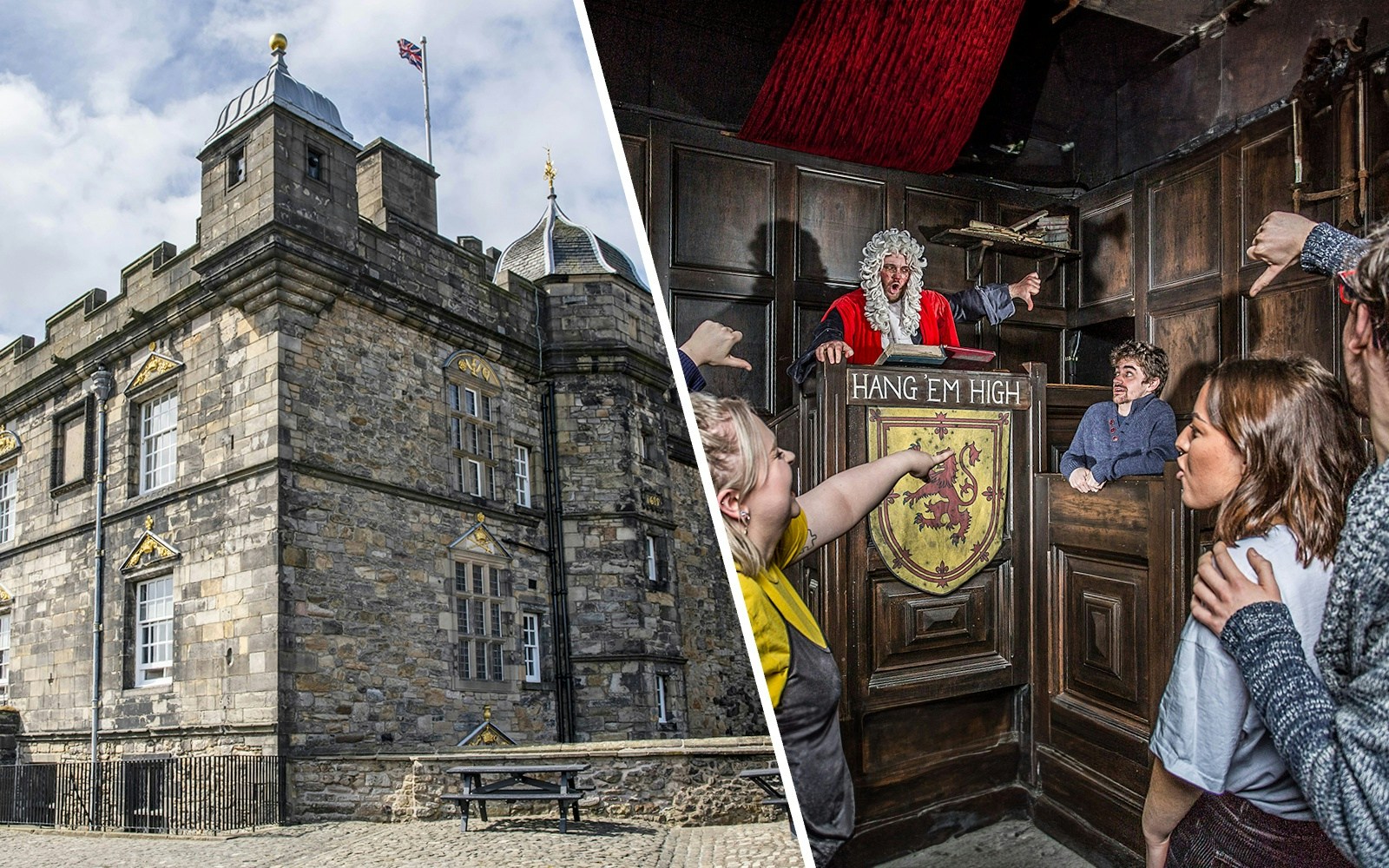
Edinburgh Castle exterior and interactive courtroom scene at Edinburgh Dungeon.
Placeholder Image Headout Blimp
1/5

Crown Jewels and Stone of Destiny

See the Honours of Scotland, including the coronation crown, sceptre, sword of state, and the Stone of Destiny, historically used to crown Scottish monarchs.

St. Margaret’s Chapel

The oldest surviving building in Edinburgh, St. Margaret’s Chapel was built in the 12th century, showcasing Romanesque architecture and Scotland’s medieval religious history.

Great Hall

Step inside the castle to admire the early 16th-century medieval hall with a hammerbeam roof and original armoury displays, offering insight into the castle’s military and royal heritage.

National War Museum

Explore exhibits covering Scotland’s military history from the 17th century to today, including uniforms, medals, and artifacts from major conflicts.

Mons Meg

Stand beside the massive 15th-century siege cannon, famous for its size and history, used in medieval warfare. From its position on the ramparts, you can snap photos overlooking the city below and take in sweeping views of Edinburgh.

Edinburgh Castle exterior and interactive courtroom scene at Edinburgh Dungeon.
Placeholder Image Headout Blimp
1/5

Royal Palace

Admire the lavish Renaissance interiors with ornate ceilings and reconstructed royal apartments, showcasing the grandeur of James IV and James V’s reign.

Chapel Royal

Walk into the ceremonial space restored to reflect its historical role, with intricate woodwork, stained glass, and period furnishings.

Great Hall

Walk into this recreated medieval hall to see how royal banquets and gatherings would have looked in the 16th century.

Stirling Castle Gardens

Stroll through the landscaped gardens, offering scenic views of the castle grounds, surrounding countryside, and the River Forth.

Views of the Highlands

Explore the castle ramparts to enjoy panoramic views of rivers, hills, and distant mountains, highlighting the castle’s strategic location and perfect for photography.

Edinburgh Castle vs Stirling Castle — key differences

CategoryEdinburgh CastleStirling Castle

Founded

11th century

12th century

Location

Edinburgh, Scotland

Stirling, Scotland

Management

Historic Environment Scotland

Historic Environment Scotland

Crowds

Generally very busy, especially in peak season

Often less crowded than Edinburgh

Time needed

2-3 hours

1.5-2.5 hours

Getting there

Easy access from the city centre (walk/public transport)

Short drive or train + short uphill walk

Royal connections

Historic royal residence and coronation site

Important royal palace and coronation location

Military history

Strong military significance

Significant defensive role historically

Key highlights

Iconic fortress, panoramic city views

Renaissance palace, scenic ramparts and gardens

Architecture

Primarily medieval fortress

Blend of medieval and Renaissance palace

Accessibility

Some steep sections, older site layout

Some improved accessibility but uneven surfaces

Nearby attractions

Royal Mile, Holyrood Palace

Wallace Monument, Bannockburn area

Best for

Experiencing a dramatic urban castle with sweeping city views, bustling atmosphere, and a sense of Edinburgh’s historic heart

Experiencing a majestic, scenic castle in a quieter setting, with countryside panoramas, outdoor exploration, and a connection to Scotland’s military and royal history

Plan your visit to Edinburgh Castle and Stirling Castle

  • Edinburgh Castle: Open daily from 9:30 am to 6 pm (April–September) and 9:30 am to 5 pm (October–March). The last entry is about 5:15 pm or 4:15 pm, respectively. The castle is closed on 25th and 26th December.
  • Stirling Castle: Open daily from 9:30 am to 6 pm (April–September) and 9:30 am to 5 pm (October–March). The last entry is about 5:15 pm or 4:15 pm, respectively. The castle is typically closed on Christmas Day and Boxing Day.
  • Edinburgh Castle: Arrive around 9:30 am to beat peak crowds, especially in summer. Late afternoons (4:00–5:00 pm) are quieter and offer softer light for photography.
  • Stirling Castle: Morning visits (9:30–11:00 am) are ideal for cooler temperatures and fewer visitors. Mid‑afternoon brings excellent countryside light and clearer views of the Highlands.

Edinburgh Castle

Location: Castlehill, Edinburgh EH1 2NG, UK.

The castle is easily reached on foot from the Royal Mile or Princes Street. Public transport options include city buses and trams, and the nearest large car park is Castle Terrace NCP.

Know more

Stirling Castle

Location: Castle Wynd, Stirling, FK8 1EJ, UK.

The castle is accessible by train (Stirling station, then a 10–15 minute uphill walk) or by car, with on‑site parking available (first come, first served). Accessible parking spaces are also available close to the entrance.

Edinburgh Castle

  • Cafes: The Redcoat Café serves hot meals, snacks, and drinks, and The Tea Rooms offer lighter fare, cakes, and afternoon tea.
  • Toilets: Standard and accessible toilets, plus baby‑changing facilities, are available (some temporarily relocated due to refurbishment).
  • Gift shops: Located near the Crown Square and entrance, selling souvenirs and books.
  • Audio guides: Available in multiple languages from the audio booth beyond the portcullis gate.

Stirling Castle

  • Food & drink: The on‑site Unicorn Café serves light meals and refreshments.
  • Toilets: Standard and accessible toilets are available throughout the site.
  • Gift shop: The on-site gift shop offers souvenirs, books, and local crafts.

Edinburgh Castle

  • Steep, cobbled paths and slopes can be challenging. A mobility vehicle is available on request to help visitors reach Crown Square.
  • Sensory backpacks and ear defenders are available to borrow.
  • Assistance dogs are welcome.
  • Adapted toilets are located on-site, but some are temporarily closed for refurbishment; temporary facilities are provided.

Stirling Castle

  • A mobility vehicle can be requested to help visitors navigate the slope up to the Inner Close.
  • Manual wheelchairs are available on a first‑come, first‑served basis.
  • Accessible parking with reserved spaces near the entrance.
  • The main castle approach is cobbled and sloping; some historic areas have uneven surfaces or steps.
  • Assistance dogs are permitted; other pets are not.
  • Photography is allowed in most areas, but flash and tripods may be restricted in museums or certain rooms.
  • Bags and backpacks may be checked for security reasons.
  • Food and drinks are only allowed in designated areas or cafés.
  • Respect the historic buildings by not touching artifacts and following staff instructions.
  • Pets are not allowed inside, except for assistance animals.
  • Children should be supervised at all times, especially near ramparts or steep areas.

Tips for visiting

  • Arrive early to avoid peak crowds, especially at Edinburgh Castle.
  • Wear comfortable shoes for walking on cobbled or uneven surfaces.
  • Combine your visit with nearby attractions: the Royal Mile and Princes Street for Edinburgh, or the Wallace Monument and Battle of Bannockburn for Stirling.
  • Check the official castle websites for special events, exhibitions, and seasonal activities before you go.

Frequently asked questions about visiting Edinburgh Castle and Stirling Castle

Edinburgh Castle is ideal for first-time visitors because it combines iconic city views, rich history, and easy access to nearby attractions like the Royal Mile and Princes Street. Stirling Castle is also excellent for first-timers who want a quieter, scenic experience and a sense of Highland history.